
Few things make drivers more nervous than seeing the temperature gauge shoot up or steam coming from under the bonnet. If you’ve noticed your car overheating, it’s important not to ignore it. Overheating can quickly cause engine damage and leave you stranded.
At Coastwide Service Centre here in Molendinar on the Gold Coast, we often get calls from worried drivers saying, “My car is overheating, what should I do?” We;ll explain the common reasons for car overheating, what you can do if it happens, and how to stop it from happening again.
Why car overheating is serious
Your engine runs at high temperatures, but it’s kept cool by a mix of coolant, fans, and the radiator. When that cooling system fails, you get car overheating.
An overheating engine can:
- Warp the cylinder head.
- Blow the head gasket.
- Damage pistons and valves.
- Leave you with a massive repair bill.
That’s why you should never keep driving with your car overheating. Even a few extra kilometres can turn a small repair into a full engine rebuild.
Signs your car is overheating
Sometimes it’s obvious. Other times, the signs are subtle. Here’s what we see at Coastwide Service Centre when customers come in for car overheating issues:
- Temperature gauge rising, creeping into the red zone.
- Warning lights: temperature or check engine light comes on.
- Steam or smoke coming from under the bonnet.
- Heater blowing cold air: a clue coolant isn’t circulating.
- Strange smells: sweet smell of leaking coolant or burning oil.
- Loss of power: engine goes into limp mode when hot.
If you notice any of these, stop and investigate before the problem worsens.
Common causes of car overheating
There isn’t just one reason for car overheating. Here are the most common issues we find in our Gold Coast workshop:
1. Low coolant
Coolant (antifreeze) carries heat away from the engine. If it’s low due to leaks or evaporation, your car can’t stay cool. Many cases of car overheating are simply because the coolant level dropped too far.

2. Coolant leaks
Hoses, the radiator, water pump or heater core can leak over time. Even small leaks cause car overheating because the system loses pressure and fluid.
3. Faulty thermostat
The thermostat controls coolant flow. If it gets stuck closed, coolant can’t move, and you’ll see your car overheating quickly.
4. Broken radiator fan
Modern cars rely on electric fans to cool the radiator when you’re stopped or in slow traffic. A failed fan motor, fuse or relay can cause car overheating in traffic but not on the highway.
5. Blocked radiator
Dirt, bugs, or corrosion can clog the radiator so heat can’t escape. A blocked radiator is a classic cause of car overheating on the Gold Coast, especially if you drive in sandy or dusty areas.
6. Water pump failure
The water pump keeps coolant circulating. If it fails, you’ll soon have your car overheating.
7. Blown head gasket
This is the expensive one. A blown gasket lets combustion gases enter the cooling system, pushing coolant out and causing car overheating plus white exhaust smoke.
8. Overworked A/C and towing
Hot Gold Coast days, heavy towing, or long hill climbs can push cooling systems to their limit. If your cooling system is weak, this extra load can trigger car overheating.
What to do if your car is overheating
If you see the temperature gauge climbing or steam from the bonnet, act fast:
- Turn off the A/C, it reduces engine load.
- Turn on the heater, it can help pull heat away from the engine.
- Pull over safely, stop driving before you damage the engine.
- Switch the engine off, let it cool down fully before opening the bonnet.
- Never open the radiator cap hot, scalding coolant can spray out.
- Call for help if needed, or head to Coastwide Service Centre once safe.
Driving with your car overheating can cost thousands in repairs. Stopping early can save the engine.
How far can you drive with your car overheating?
The honest answer: you shouldn’t. Some people try to “limp” home when they see their car overheating, but even a few minutes of high heat can warp the engine head or blow the gasket.
If the gauge is rising or you see steam, it’s safest to stop right away. Call a tow truck if needed. It’s cheaper than a new engine.
Why cars overheat more on the Gold Coast
Our climate is tough on cooling systems. Hot days, long drives up and down the M1, and beach sand or salt can all lead to car overheating. Heat speeds up wear on hoses, radiators and thermostats.
That’s why we recommend regular cooling system checks, especially before summer.
Diagnosing car overheating problems
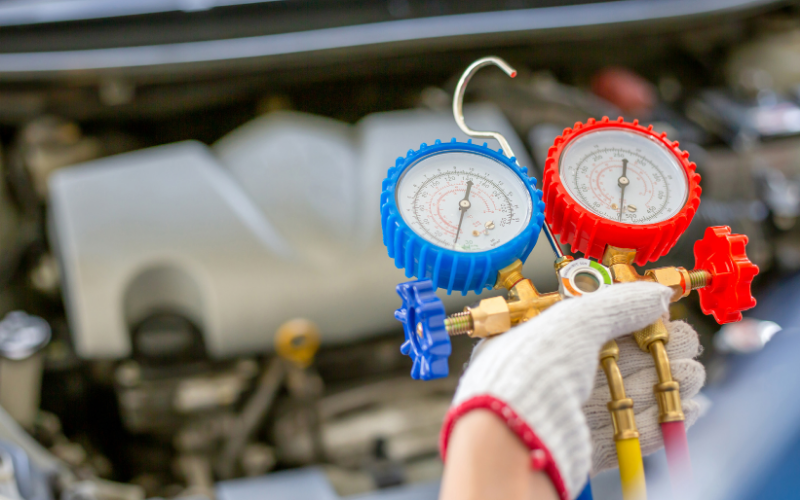
At Coastwide Service Centre, we have the tools to quickly find the cause of car overheating:
- Pressure tests to check for leaks.
- Thermostat and water pump checks.
- Radiator flow and fan tests.
- Head gasket tests if we suspect a blown gasket.
Guessing can waste money. For example, some drivers replace a thermostat only to find the water pump was bad. Proper testing stops that.
Repair costs for car overheating
The price depends on what’s wrong:
- Coolant top-up – cheap if no leaks.
- Hose or clamp replacement – low cost.
- New radiator – moderate cost.
- Water pump or thermostat – mid to higher cost.
- Head gasket replacement – more expensive, often over $2000.
Catching car overheating early is key. A small hose leak is cheap. A full engine rebuild is not.
Preventing car overheating
Good maintenance can stop most car overheating problems:
- Check coolant level often.
- Replace coolant on schedule (it breaks down over time).
- Inspect hoses and radiator for leaks or cracks.
- Service the cooling system during regular maintenance.
- Fix any warning lights early instead of ignoring them.
At Coastwide Service Centre, we include cooling system checks in routine servicing to help prevent car overheating surprises.
My car keeps overheating – what now?
If you’ve topped up coolant and your car is still overheating, don’t keep driving. It could be a bigger fault like a water pump or head gasket. The sooner it’s checked, the better the chance of a simple fix.
Bring it to Coastwide Service Centre in Molendinar and we’ll:
- Test the cooling system.
- Check the radiator, fans and thermostat.
- Find leaks or blown gaskets.
- Get you back on the road safely.
Why overheating happens after short drives
Some people say, “My car is overheating even though I’m only going a short distance.” This usually means:
- Coolant is very low.
- Thermostat is stuck closed.
- Water pump isn’t working.
- Radiator fan isn’t coming on.
A healthy cooling system shouldn’t let the engine heat up that fast. It’s a sure sign you need a mechanic.
Overheating in stop-and-go traffic
It’s common to see car overheating while stuck in traffic but not on the highway. This usually means the radiator fan isn’t working or airflow is blocked. At speed, air cools the radiator naturally, but in slow traffic the fan must kick in. If it fails, heat builds quickly.
Overheating when towing or going uphill
Gold Coast drivers who tow caravans or boats often ask why their car is overheating on hills. Towing adds a big load, making the engine work harder. If your cooling system isn’t strong or well maintained, it can’t handle the extra heat.
If you tow often, consider an upgraded radiator or transmission cooler. We install these at Coastwide Service Centre to help prevent car overheating for heavy-duty use.

Why using only water is risky
In emergencies, people top up with plain water. That’s fine short-term, but running just water long-term can cause car overheating. Coolant isn’t just antifreeze, it also stops rust, raises the boiling point and protects the system.
We see lots of corroded radiators in cars run on plain water, leading to car overheating and expensive repairs.
What not to do if your car is overheating
- Don’t keep driving hoping it cools down.
- Don’t open the radiator cap when hot.
- Don’t pour cold water on a hot engine, it can crack parts.
- Don’t ignore warning lights.
These mistakes turn simple car overheating problems into major engine work.
Call Coastwide Service Centre for overheating issues
We’ve been helping Gold Coast drivers for years and know how to handle car overheating quickly and safely. At Coastwide Service Centre:
- We use the right diagnostic tools to find the exact fault.
- We repair everything from hoses to full radiators and water pumps.
- We’re experienced with local conditions like heat, towing and coastal corrosion.
- We’re honest about costs and explain options clearly.
You can find us at Unit 4/8 Reichert Dr, Molendinar QLD 4214, or book online.
Quick summary: car overheating checklist
- Temperature rising? Pull over as soon as safe.
- Turn off A/C, turn on heater to help cool the engine.
- Don’t open radiator cap while hot.
- Check coolant once cool.
- If unsure, call a mechanic.
Driving with your car overheating is risky and expensive. Stopping early and calling Coastwide Service Centre can save your engine.

So why is your car overheating? It could be low coolant, leaks, a broken fan, failed thermostat, water pump, or even a blown head gasket. Whatever the cause, it’s never safe to ignore.
If you’re on the Gold Coast and your car is overheating, get it checked right away. At Coastwide Service Centre, we’ll quickly find the cause, fix it properly, and help prevent future overheating problems.
Don’t wait until you’re stuck on the side of the M1 with steam pouring out. Book an inspection at coastwiderwc.com.au or visit us at Unit 4/8 Reichert Dr, Molendinar QLD 4214.
Keeping your engine cool now saves huge repair bills later, and keeps you driving safely in our Queensland heat.